Why do I need medical grade paper for sterilization? Because packaging helps protect cleaned instruments throughout processing, storage, and handling. In a validated system, the paper allows the sterilizing agent to reach the contents while helping prevent microbial contamination afterward. That balance matters. A sealed pouch should stay intact, with clear seals and no tears, punctures, or damp spots.
Medical grade paper is manufactured and tested for use in medical packaging, unlike ordinary paper, which may shed fibers, weaken, or block sterilant unevenly. The right material also needs to suit the chosen sterilization method, such as steam or ethylene oxide. Compatibility depends on the product, pouch design, sealing equipment, and validated cycle—not on the paper alone. A package can look sound and still fail if its seal or material is unsuitable.
For example, a nurse may notice a split seam while opening a pouch, or a small wet patch after a steam cycle. These details are practical warning signs, not reasons to guess. Follow the instrument and packaging manufacturers’ instructions, inspect packages before use, and keep them dry and undamaged. Requirements can vary by setting. It is easy to focus only on the sterilizer and overlook the wrapper; that assumption deserves a second look. Medical grade paper supports a reliable sterile barrier when selected and used as part of a properly validated process.
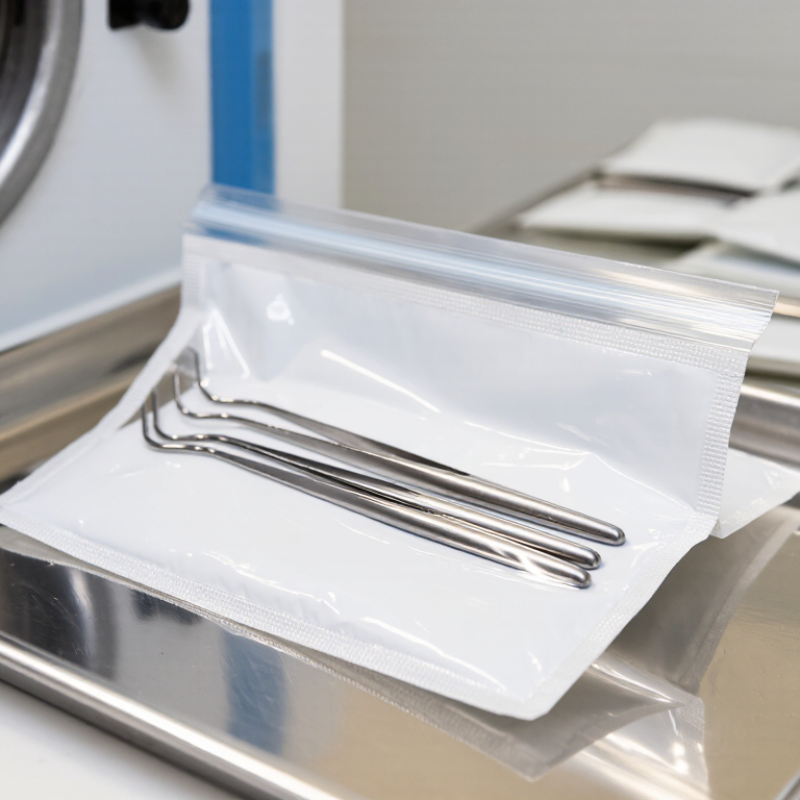
Why Do You Need Medical Grade Paper for Sterilization?
What Defines Medical-Grade Sterilization Paper Under EN 868-3?
EN 868-3:2017 covers paper used to make sterilization pouches and reels. It sets requirements and test methods for properties such as strength, air permeability, and resistance to handling. These checks help ensure paper can withstand processing while allowing sterilant to pass through. It must also support a secure seal in the finished pack.
Medical-grade is not just a label. The paper must be suitable for its intended packaging use, and the complete sterile barrier system needs assessment under ISO 11607-1. Paper alone cannot prove that a finished pack will maintain sterility. That distinction matters.
The World Health Organization’s 2022 global infection-prevention report estimates that 7 in 100 patients in high-income acute-care hospitals, and 15 in 100 in low- and middle-income settings, acquire at least one healthcare-associated infection during their stay. Sterile packaging is one part of infection prevention, not a substitute for validated sterilization or careful handling. A practical check is the paper’s technical documentation: confirm the applicable standard, test results, and intended sterilization process. Paper is not magic. Small differences in storage, sealing, or moisture can still affect package performance.
| Dimension | What EN 868-3 Covers | Why It Matters | What to Verify |
|---|---|---|---|
| Intended packaging use | Paper intended for manufacturing specified healthcare packaging, including paper bags and pouches or reels covered by related parts of the EN 868 series. | Packaging materials must be suitable for the device, packaging format, and intended sterilization process. | Confirm the paper’s stated use and compatibility with the packaging configuration and sterilization method. |
| Material identity and construction | Requirements and test methods for paper used in the relevant packaging applications. | Consistent paper construction supports predictable converting, sealing, and packaging performance. | Review material specifications, technical documentation, and lot identification. |
| Microbial barrier and porosity | Paper properties are assessed in the context of its role as a porous packaging material. | The material must allow the sterilizing agent to reach the contents while helping maintain a barrier after processing. | Check applicable test results and confirm performance in the finished, validated packaging system. |
| Strength and integrity | Relevant paper characteristics are evaluated using the standard’s specified test methods. | Paper needs to withstand handling and the stresses associated with packaging and sterilization without unacceptable damage. | Review applicable strength and integrity test results, and inspect finished packs for tears, holes, or other damage. |
| Cleanliness and appearance | Paper is assessed against requirements applicable to its intended medical packaging use. | Foreign matter, defects, or inconsistent material can affect packaging quality and the reliability of the barrier. | Use documented incoming-material checks and supplier quality records. |
| Printability and converting | Paper is intended for conversion into packaging formats specified by the relevant EN 868 parts. | Suitable surface and converting performance help produce legible, consistently manufactured packaging. | Confirm compatibility with printing, forming, and sealing processes; assess the finished package, not paper alone. |
| Standard relationship | EN 868-3 addresses paper requirements and test methods; related EN 868 parts address particular packaging materials or formats. | Meeting a material standard does not, by itself, establish that a complete package or sterilization process is validated. | Check the applicable EN 868 parts and the broader packaging-system requirements, including ISO 11607 where applicable. |
| Process validation | Material conformity is one part of demonstrating packaging suitability. | Performance depends on the complete system, including the device, package design, seals, sterilization cycle, and handling. | Validate the finished packaging system for the intended sterilization process and confirm maintenance of package integrity through use. |
Note: “Medical-grade” is a descriptive term, not a substitute for checking the applicable standard, the paper’s documented specifications, and validation of the complete packaging system. Use the current standard edition and applicable regulatory requirements for the intended market.
It sets requirements and test methods for paper used in sterilization pouches and reels. Tests include strength, air permeability, and handling resistance.
No. The complete sterile barrier system needs assessment under ISO 11607-1. Paper alone cannot prove sterility.Paper is not magic.
Tiny connected pores let sterilant enter and help air escape. Bigger pores are not automatically better; the paper must also resist microbial penetration.
No. Cycle suitability depends on the sterilizer, load, and packaging configuration. Follow the validated process for that setup.
It should tolerate handling, storage, and distribution while keeping its seal intact. It should also open cleanly, without loose fibers reaching the device.Looks are not proof.
Yes. Dense packing can restrict airflow, even when the paper is suitable. Check performance under real load conditions.
Check the applicable standard, test results, and intended sterilization process. A neat-looking sheet is not enough.Small details matter.
Moisture and storage conditions can change package performance. Seal width and paper variation matter too, so testing should reflect actual production conditions.
Why do I need medical grade paper for sterilization? It provides a controlled, validated material for sterile barrier packaging, helping protect medical devices before use. Under EN 868-3, the paper is assessed for properties relevant to packaging, including strength, cleanliness, and its ability to work with an appropriate sealing process. Its engineered porosity allows sterilizing agents to enter and air to escape, while supporting an effective barrier after processing.
Packaging performance must also be evaluated as a complete system against ISO 11607-1 requirements. The paper and seals should be suitable for the intended sterilization method and cycle, including steam exposure at 121°C or 134°C when validated for those conditions. ASTM F88 can assess seal strength, while ASTM F1929 can help detect channel leaks in porous packaging. Together, material selection, process validation, and routine testing support package integrity during handling, storage, and transport.

 Onyx Medical