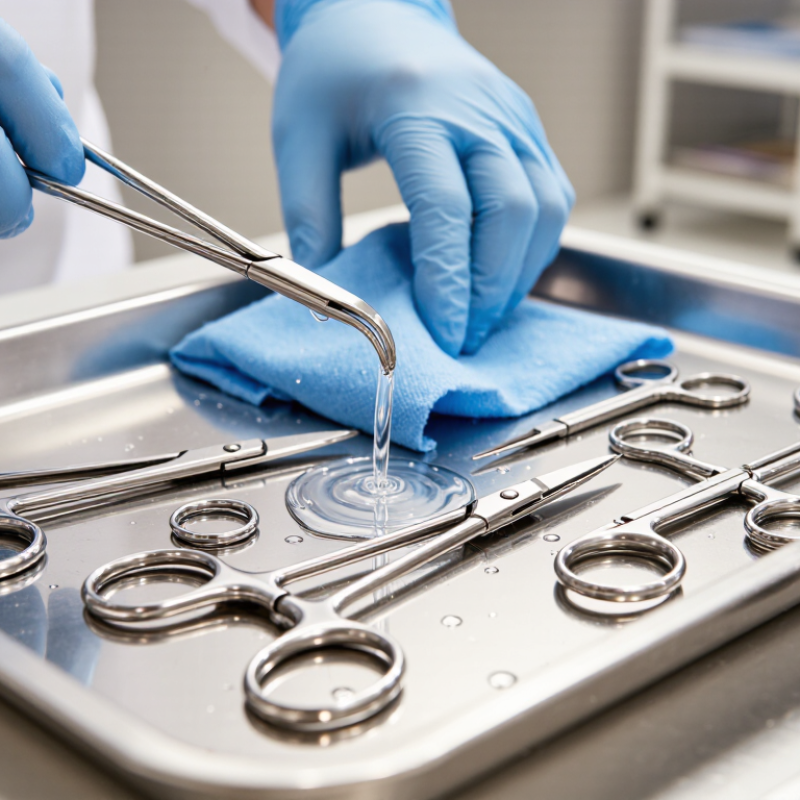
| Thorough cleaning before sterilization |
Removes blood, tissue, saline, lubricants, and other residues that can retain moisture or create localized chemical attack during heating. |
Clean instruments as soon as practical after use. Open hinged tools, disassemble removable parts, and follow the device manufacturer’s cleaning instructions. |
Pitting, staining, discoloration, stiff joints, and loss of surface passivity. |
Use visual inspection, magnification when appropriate, and functional checks before packaging. |
| Use a neutral or mildly alkaline, instrument-compatible detergent |
Appropriate detergents remove organic soil without unnecessarily attacking stainless-steel surfaces or joint areas. |
Follow the detergent concentration, temperature, contact time, and rinsing requirements stated in the product and instrument instructions. |
Strong acids, strong alkalis, excessive concentration, or prolonged exposure may cause surface damage or accelerate corrosion. |
Check chemical dosing records and investigate unexpected residue, dullness, or surface etching. |
| Rinse thoroughly with suitable water |
Removes detergent, salts, chlorides, and other dissolved contaminants that may remain after cleaning and become concentrated during drying or sterilization. |
Use water quality appropriate for the facility’s validated process. Purified or demineralized water is commonly used for the final rinse when required by local procedures. |
Water spots, chloride-related pitting, mineral deposits, and recurring brown or blue staining. |
Monitor water-quality parameters specified by the facility, such as conductivity, hardness, chloride, or other relevant limits. |
| Dry instruments completely before packaging |
Prevents trapped water from remaining in hinges, box locks, cannulations, serrations, and other crevices where oxygen-starved moisture can promote corrosion. |
Use validated drying equipment or clean, oil-free compressed air suitable for medical-device processing. Pay special attention to hollow and jointed instruments. |
Flash rust, crevice corrosion, water staining, and corrosion inside channels or joints. |
Inspect instruments immediately after the cycle and confirm that no visible moisture remains before storage. |
| Use validated steam sterilization cycles |
Properly controlled saturated steam sterilizes efficiently while minimizing unnecessary heat exposure and condensate-related problems. |
Use the cycle parameters specified for the instrument and sterilizer. Common reference cycles include 121 °C gravity and 132–135 °C dynamic-air-removal cycles, but exposure time and load requirements must be validated. |
Overprocessing, wet packs, inadequate air removal, or excessive condensate can increase staining and corrosion risk. |
Review physical cycle records, chemical indicators, biological monitoring, and load-specific documentation according to facility policy. |
| Complete the sterilizer drying phase |
Removes residual condensate from packages and instrument surfaces before handling and storage. |
Do not shorten the validated drying phase. Allow packs to cool in a clean, low-humidity area before moving or stacking them. |
Wet packs, corrosion during storage, package damage, and contamination risk. |
Quarantine wet or visibly compromised packs and identify the cause before release. |
| Avoid chlorides and halide-containing residues |
Chloride ions can locally break down the passive oxide layer on stainless steel, especially in warm, wet, or crevice conditions. |
Prevent contact with saline, bleach, chloride-containing disinfectants, and chloride-contaminated water unless specifically approved and immediately rinsed. |
Localized pitting that may continue beneath small surface marks and become difficult to detect. |
Trend corrosion findings by load, water source, detergent, and clinical area to identify chloride exposure. |
| Lubricate hinges only with a water-soluble instrument lubricant when indicated |
Maintains smooth movement and helps protect articulated areas without leaving an unsuitable film that can interfere with cleaning or sterilization. |
Apply sparingly after cleaning and before packaging, following the instrument instructions. Do not use household oils or petroleum products unless specifically approved. |
Residue buildup, impaired sterilant contact, sticky joints, and increased retention of soil or moisture. |
Confirm free movement and absence of visible lubricant pooling after processing. |
| Prevent contact between dissimilar metals |
Reduces galvanic corrosion when different metals are electrically connected in the presence of moisture or conductive residues. |
Separate instruments during cleaning and packaging when practical, and follow the approved tray configuration. |
Localized discoloration, accelerated attack at contact points, and damage to delicate cutting surfaces. |
Inspect contact areas and review tray loading when corrosion appears only on particular instrument combinations. |
| Inspect, maintain, and remove damaged tools from service |
Early detection prevents pits, scratches, rough surfaces, and damaged joints from trapping soil and spreading processing problems. |
Inspect after cleaning and before use. Do not polish aggressively or use abrasive materials that can remove the passive layer or alter instrument geometry. |
Progressive pitting, impaired function, retained bioburden, and premature instrument failure. |
Document findings, repair or replace unsuitable instruments, and investigate repeated corrosion rather than treating only the visible mark. |
 Onyx Medical