A sterile medical device is useful only when it reaches the point of care protected and ready for aseptic presentation. The sterile barrier system helps make that possible. It separates the device from the surrounding environment after sterilization and during storage and transport. The barrier may be a pouch, a tray with a lid, or another validated package design. Small details matter. A pinhole, a weak seal, or damage from handling can compromise protection, even when the package looks intact at a glance.
What is the role of a sterile barrier system? It is more than a wrapper: it must help maintain sterility until use while allowing staff to open the package without contaminating the device. Its materials and seals also need to suit the chosen sterilization process and the conditions the package will encounter. Those needs can vary by device and setting. A package that performs well in testing still depends on consistent production, careful inspection, and appropriate handling. That last point is easy to underestimate.
This guide explores ten practical roles, from maintaining a sterile boundary to supporting safe storage, transport, identification, and aseptic presentation. It also considers how packaging design can affect visibility, opening, and confidence at the point of use. These roles are connected, not interchangeable. No single feature can compensate for every weakness, and real-world performance deserves ongoing review. The aim is a clear, evidence-minded overview of what the system does—and where careful judgment remains necessary.
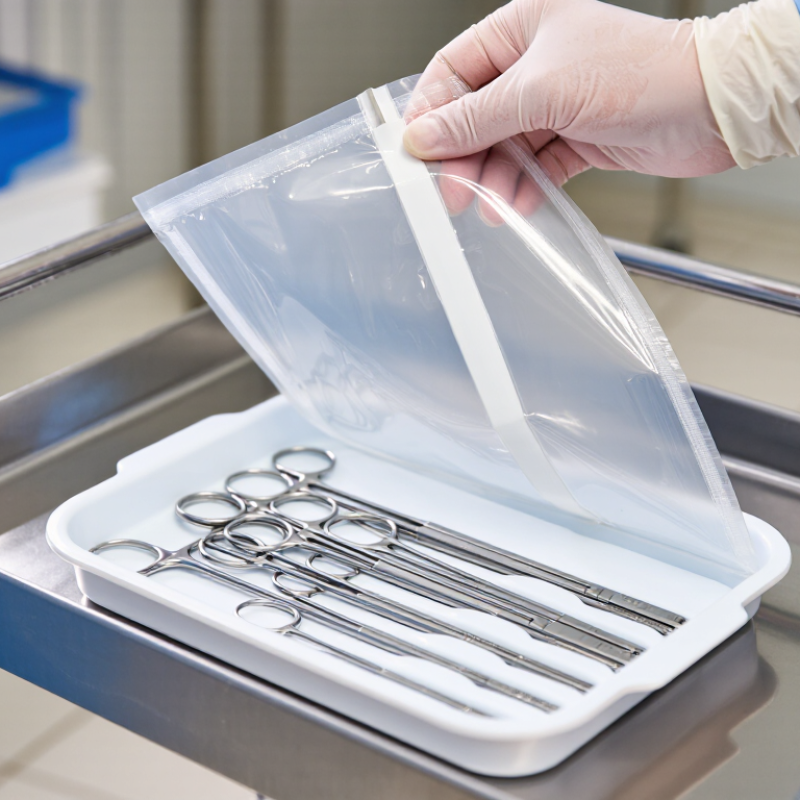
A sterile barrier system (SBS) is the packaging component that prevents microbial entry after a medical device has been sterilized. It is not simply an outer box. It may be a sealed pouch, a tray with a lid, or another validated enclosure that allows sterilization and later aseptic presentation. The complete packaging system often includes protective layers around it.
The SBS sits closest to the product. Cartons or cushioning around it help guard against crushing, punctures, moisture, and handling damage. A paper-plastic pouch, for example, may have a clear film side and a porous side. Where applicable, the porous material allows sterilant to pass through, while the sealed edges must stay continuous. Small flaws matter.
A useful SBS must suit the device, sterilization method, storage conditions, and opening process. Packaging teams assess materials, seals, and performance through documented testing, not appearance alone. A package may look sound yet fail after transport or aging. That is worth remembering. It also needs to open without shedding material or unnecessarily touching the sterile device. No package is perfect; design choices involve trade-offs between protection, usability, and waste. Final acceptance depends on evidence for the intended use, not a label or a single test.
| No. | Role | What It Does | Packaging Significance |
|---|---|---|---|
| 1 | Creates a microbial barrier | Helps prevent the ingress of microorganisms after the device has been sterilized, when the sterile barrier is intact. | Material selection and package design must provide a suitable barrier for the intended product and storage conditions. |
| 2 | Maintains sterility until use | Helps preserve the sterile state from completion of sterilization through storage, distribution, and handling up to opening. | Protection depends on the integrity of the complete package system and its seals or closures over the claimed shelf life. |
| 3 | Allows sterilization | Is designed to permit the selected sterilizing agent or process to reach the product where required. | Packaging materials and configuration must be compatible with the chosen sterilization method and validated process. |
| 4 | Supports aseptic presentation | Enables the sterile contents to be removed or presented without contaminating them when the package is opened as intended. | Opening features and package layout should support clear, controlled handling by the user. |
| 5 | Provides a package closure | Uses seals or other closures to join package components and help maintain the barrier. | Closure design and sealing conditions need to be established and validated for the packaging materials and process. |
| 6 | Preserves package integrity | Forms part of a package system intended to resist loss of integrity during expected storage and distribution conditions. | Integrity can be affected by factors such as seal defects, punctures, material damage, and environmental exposure. |
| 7 | Protects the product within the package | Helps contain the medical device and can provide a degree of physical protection, depending on the design. | Additional protective packaging may be needed to guard against mechanical hazards during shipping and handling. |
| 8 | Enables inspection of the package | Package materials and design can make visible damage or certain defects easier to identify before use. | Inspection is useful but does not replace validated integrity testing or other required quality controls. |
| 9 | Supports shelf-life claims | Provides the barrier component evaluated as part of demonstrating that the sterile package remains suitable over time. | Shelf-life evidence should account for aging, storage conditions, distribution effects, and package integrity. |
| 10 | Works within a packaging system | Functions as the minimum package that prevents microbial ingress and permits aseptic presentation; it may be used with protective packaging. | It is not the same as the entire packaging system: outer packaging may add protection, identification, or transport support. |
It is the packaging layer closest to a sterilized medical device. It helps prevent microorganisms from entering until the package is opened.
No. It may be a sealed pouch, a lidded tray, or another validated enclosure. Cartons and cushioning provide extra protection.
Some pouches have a porous side that lets sterilant pass through. Their sealed edges must remain continuous. Small flaws matter.
They consider the device, sterilization method, storage conditions, and opening process. A package must also protect the device during handling and transport.
Teams test seals, package integrity, aging, and potential distribution damage. A package can look fine but fail after transport.
Records can include material lots, sealing settings, equipment, operators, and inspection results. A temperature change, for example, can be linked to affected production records.
No. Paperwork alone is not proof. Actual samples and repeatable test methods matter too.
The package should open without shedding material or unnecessarily touching the sterile device. That can be tricky. Trade-offs remain between protection, ease of use, and waste.
A sterile barrier system plays a central role in medical device packaging by creating a protective boundary that helps maintain a device’s required level of cleanliness and sterility. What is the role of a sterile barrier system? It helps protect devices from microbial and physical contamination during handling, storage, and distribution, while supporting the integrity of the package throughout its intended use. Its design must also allow the package to be opened safely and the device presented in a way that supports aseptic handling at the point of use.
Beyond protection, the sterile barrier system supports packaging validation and consistent quality processes. Appropriate testing and documentation can demonstrate that the package performs as intended, while clear identification and traceability information help users and manufacturers follow the device through its lifecycle. Together, these functions make the sterile barrier system an essential part of reliable medical device packaging.

 Onyx Medical