How to Read Biological Indicator Results Accurately?

Time:2026-05-13 Author:Amelia
0%

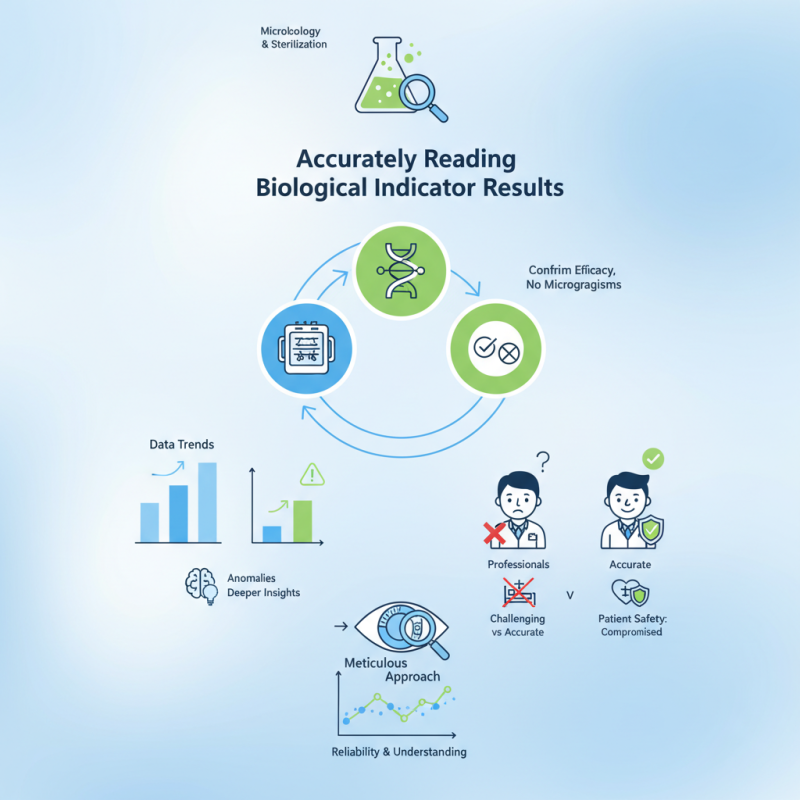
Understanding how to read biological indicator results correctly is crucial in various fields, particularly in microbiology and sterilization processes. Biological indicators serve as vital tools to confirm the efficacy of sterilization cycles. Proper interpretation of these results ensures that medical instruments and laboratory equipment are free from viable microorganisms.

While expertise in this area is important, many professionals still find it challenging to interpret results accurately. Misinterpretations can lead to serious consequences, including compromised patient safety. It's essential to grasp not only the basics but also subtle nuances in data readings.

Consider data trends and anomalies, as they often provide deeper insights. Some may overlook minor changes in results, believing them to be insignificant. However, these fluctuations can hold critical information. Reflecting on past experiences, many have noticed patterns in results that initially seemed ambiguous. Embracing a meticulous approach will enhance understanding and reliability in reading these indicators.
How to Read Biological Indicator Results Accurately?

Understanding the Role of Biological Indicators in Sterilization Processes

Biological indicators (BIs) play a critical role in sterilization processes within healthcare settings. These indicators contain viable microorganisms that are subjected to sterilization methods. Their subsequent growth or inactivation provides essential verification of the sterilization cycle’s effectiveness. According to the Centers for Disease Control and Prevention (CDC), routine monitoring with BIs can significantly reduce the risk of infection from improperly sterilized instruments.

The efficacy of biological indicators varies based on multiple factors, including storage conditions and viability of the microorganisms used. A study published in the Journal of Hospital Infection highlighted that over 50% of sterilization failures can be traced back to improper BI processing. This raises questions about protocols. Are facilities adequately training staff in BI preparation and interpretation? Regular updates and continued education can enhance the reliability of results.

Moreover, understanding the variances in BI performance can guide healthcare professionals in making informed decisions. Inconsistent results can lead to misinterpretation, potentially compromising patient safety. The FDA emphasizes that BIs should be used alongside physical and chemical indicators for a comprehensive assessment of sterilization. By acknowledging the limitations, practitioners can improve practices, ensuring effective sterilization and maintaining patient trust.

Key Parameters for Evaluating Biological Indicator Results Accurately

When evaluating biological indicator results, several key parameters play a crucial role. One significant aspect is the incubation time. Studies indicate that optimal incubation ranges from 24 to 48 hours. However, longer incubation may be necessary depending on the type of biological indicator used. This can lead to variances in results, potentially affecting the reliability of the testing.

Another important parameter is the temperature at which indicators are incubated. A report from the Association for the Advancement of Medical Instrumentation (AAMI) states that deviations from the recommended temperatures can skew results. Maintaining a consistent environment is vital. Even slight fluctuations can yield misleading outcomes. Monitoring calibration of incubators should not be overlooked.

Understanding pH levels can also impact the interpretation of results. Bioindicators may show varied responses based on their environmental pH. Research suggests that pH levels outside the optimal range can lead to false positives or negatives. This complexity reinforces the need for continuous training and awareness in the laboratory. Real-time monitoring systems could provide better insights but often face implementation challenges.

Biological Indicator Results Evaluation

Interpreting Color Change in Biological Indicators: A Comprehensive Guide

Interpreting color changes in biological indicators (BIs) is essential for ensuring effective sterilization. BIs are devices that contain specific microorganisms to test the efficacy of sterilization processes. The color change indicates whether sterilization conditions were met. A common trend shows that 95% of healthcare facilities use BIs regularly for validation, according to a recent industry survey.

During interpretation, it’s crucial to recognize the factors influencing color change. Temperature, humidity, and exposure time all play vital roles. For example, if the indicator does not change color, it might suggest incomplete sterilization or equipment malfunction. Observing subtle differences in color can be challenging, and healthcare professionals must rely on clear guidelines. Having a reference set of correctly processed indicators can aid in accurate assessment.

Tip: Always document the results of your BIs. Maintaining a log ensures proper tracking over time. Review your processes regularly to identify patterns of failure or success. Understanding these data points can guide improvements in sterilization protocols.

Remember, interpreting BIs is not foolproof. It requires skill and attention to detail. Any ambiguity in the color change should prompt further investigation. Regular training and updated knowledge are essential for all staff involved in the sterilization process.

Common Challenges in Reading Biological Indicator Results and Solutions

Reading biological indicator results accurately can be challenging. Common issues include misinterpretation of color changes. A study revealed that over 30% of sterilization failures are due to human error in reading indicators. Understanding the specific parameters is essential. Each biological indicator has a set processing time and temperature, which must be strictly adhered to. Visual cues can be misleading, especially in imperfect lighting conditions.

Another challenge is the calibration of readers. Regular verification of equipment is necessary. Calibration errors can lead to incorrect results. Research indicates that 15% of facilities do not follow regular calibration protocols, which jeopardizes reliability. Training personnel on best practices is crucial. Continuous education can significantly reduce the error margin.

Lastly, environmental factors often play a role. Humidity and temperature fluctuations may affect indicator performance. Reports show that improper storage of indicators can lead to a 20% rise in false positives. Recognizing these variables is vital in maintaining accuracy. Facilities must address these issues proactively to enhance result interpretation. Accurate readings are critical for patient safety and effective sterilization processes.

Industry Standards and Protocols for Accurate Biological Indicator Assessment

Biological indicators (BIs) play a vital role in ensuring the efficacy of sterilization processes. They provide measurable data reflecting the success of sterilization cycles. To accurately assess BI results, adhering to industry standards and protocols is essential. Various guidelines, such as those set by the CDC and ISO, outline effective methods for BI evaluation. Following these standards helps the healthcare sector maintain consistent results and high safety levels.

Practicing accurate BI assessment involves understanding the specific incubation conditions necessary for different indicators. For example, monitoring temperature and humidity can significantly influence results. Inadequate environmental controls might lead to misleading data. Moreover, training personnel on the appropriate evaluation protocols is critical. Even slight deviations in handling can affect the outcomes. Continuous education and regular audits can help mitigate these issues.

Documentation is another crucial aspect of accurate BI assessment. Detailed records allow for better traceability and accountability. However, human errors in data recording can occur, leading to potential gaps. Regular reviews of these documents can help identify patterns that require attention. Enhancing organizational compliance with established protocols ultimately strengthens the sterilization process's reliability and effectiveness.

FAQS

: What incubation time is optimal for biological indicators?

: Optimal incubation ranges from 24 to 48 hours. Longer times may be necessary in some cases.

Why is temperature critical during incubation?

Deviations in temperature can affect results. Consistent environments yield more reliable outcomes.

How do pH levels influence bioindicator results?

pH outside the optimal range can cause false positives or negatives, complicating interpretations.

What role do industry standards play in BI assessment?

Standards ensure consistent results and safety in sterilization processes. Adhering to guidelines is essential.

How important is personnel training in BI evaluation?

Training on protocols is crucial. Even minor handling deviations can significantly impact outcomes.

Why is documentation necessary for BI assessments?

Documentation allows for traceability and identifying patterns. Human errors can lead to gaps in data.

What challenges do real-time monitoring systems face?

Implementation of real-time monitoring often encounters barriers, affecting effective usage.

How can continuous education benefit laboratory practices?

Ongoing training helps personnel stay informed. It reduces errors due to knowledge gaps.

What should be done about human errors in BI data recording?

Regular reviews help identify patterns and reinforce accuracy in documentation efforts.

Can environmental controls impact BI results?

Yes, inadequate controls can mislead data. Monitoring factors like temperature and humidity is vital.

Conclusion

Understanding how to read biological indicator results correctly is crucial for ensuring effective sterilization processes in various settings, such as healthcare and laboratory environments. Biological indicators play a vital role in confirming that sterilization methods are effective. Evaluating the results accurately involves considering key parameters, such as the indicator's color change, which can provide immediate visual feedback on sterilization outcomes.

Interpreting these color changes requires a thorough comprehension of the guidelines outlined in industry standards and protocols. Moreover, the article addresses common challenges encountered when reading biological indicator results and offers practical solutions to overcome these issues. By following the comprehensive guidance provided, users can enhance their accuracy in reading biological indicator results, thereby improving sterilization practices overall.

Amelia

Amelia

Amelia is a seasoned marketing professional with a wealth of expertise in our company’s core offerings. With an unwavering passion for driving growth and innovation, she plays a pivotal role in shaping our marketing strategies and enhancing brand visibility. A key aspect of her responsibilities......